Understanding scale factor in math problems is essential for anyone working with measurements, drawings, or models. It helps explain how sizes change when something is made larger or smaller while keeping the same proportions. Whether you're solving geometry problems or trying to figure out real-world scenarios like map reading or architectural blueprints, knowing how to use scale factor makes these tasks easier and more accurate.
Scale factor is a number that shows how much a shape or object has been enlarged or reduced. For example, if a drawing uses a scale factor of 2, every part of the original image is twice as big in the new version. If the scale factor is 1/2, everything is half the size. This concept applies to shapes, distances, areas, and even volumes in math problems.
How do you calculate scale factor?
To find the scale factor between two similar shapes, divide the length of a side in the new shape by the corresponding side in the original. If the result is greater than 1, the shape has been scaled up. If it’s less than 1, the shape has been scaled down. This simple calculation helps in comparing sizes and solving many types of math problems.
For instance, if a rectangle is originally 4 inches wide and becomes 12 inches wide after scaling, the scale factor is 12 divided by 4, which equals 3. That means the new rectangle is three times as wide as the original. Using this method ensures accuracy when working with scaled versions of objects.
When do people use scale factor in real life?
Scale factor comes into play in many everyday situations. Architects use it to create blueprints that represent buildings at a smaller size. Engineers rely on it when designing models for testing. Artists might use it to resize images for different formats. Even in cooking, adjusting recipes for more or fewer people involves a form of scale factor.
Maps are another common example. A map might show a scale factor of 1:10,000, meaning that 1 inch on the map equals 10,000 inches in real life. Understanding this allows people to estimate distances and plan trips effectively. In each case, scale factor helps maintain proportional relationships between the original and the scaled version.
Common mistakes when using scale factor
One frequent error is forgetting to apply the scale factor consistently across all dimensions. If you only scale one side of a shape, the proportions become distorted. Another mistake is mixing up the order of division when calculating the scale factor. Always divide the new measurement by the original, not the other way around.
People also sometimes confuse scale factor with area or volume scaling. If a shape is scaled by a factor of 2, its area increases by a factor of 4 (2 squared), and its volume increases by a factor of 8 (2 cubed). Recognizing this difference is key to solving more complex problems involving scale.
Useful tips for working with scale factor
Start by identifying which parts of the problem involve scaling. Look for clues like “enlarged,” “reduced,” or “proportional.” Write down the original and new measurements to compare them clearly. Practice with simple examples before moving to more complicated ones.
Using visual aids like diagrams can help clarify how scale factor affects shapes. If you’re working with a worksheet, take time to understand each question fully before jumping into calculations. Checking your work by reversing the scale factor can also catch errors early.
Practice worksheets are great for reinforcing what you’ve learned. They provide structured problems that guide you through different aspects of scale factor, making it easier to build confidence and mastery.
Real-world examples of scale factor
Imagine you have a photo that’s 6 inches wide and want to print it at 18 inches wide. The scale factor here is 3, since 18 divided by 6 equals 3. This means the printed photo will be three times as wide as the original. If you need to fit the same image into a smaller space, say 3 inches wide, the scale factor would be 0.5, or half the original size.
Another example is in model building. A toy car might be built at a scale factor of 1:24, meaning the model is 24 times smaller than the actual car. This allows builders to create detailed replicas without needing the full-size vehicle. These examples show how scale factor connects math to practical applications.
Explore real-world examples to see how scale factor appears in daily life. Understanding these connections can make the concept more relatable and easier to grasp.
Next steps to improve your understanding
Start by reviewing basic geometry concepts like similarity and proportion. These ideas are closely related to scale factor and will help you see how they fit together. Try solving a few problems on your own, then check your answers against a solution guide or worksheet.
Ask questions if you’re unsure about any part of the process. Discussing scale factor with classmates or teachers can clarify confusion and deepen your knowledge. Keep practicing with different types of problems to build a strong foundation in this important math skill.
Continue learning by exploring more examples and exercises. The more you engage with the topic, the more comfortable you’ll become with applying scale factor in various situations.
Checklist for mastering scale factor:
- Understand what scale factor means and how it works
- Practice calculating scale factors using real examples
- Avoid common mistakes like inconsistent scaling or incorrect division
- Apply scale factor to different types of problems, including area and volume
- Review and reinforce your learning with worksheets or online resources
 Scale Factor Worksheet for Geometry Students
 Interpreting Scale Factor in Real World Examples
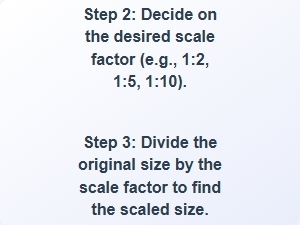 How to Calculate Scale Factor Step by Step
 Determining Scale Factor From Diagrams and Measurements
 Scale Factor Examples for Students
 Scale Factor Worksheet Problems in Geometry